Creekmouth funeral flowers etiquette and council permits
Posted on 28/10/2026
Choosing funeral flowers is rarely just about colour or price. In Creekmouth, it can also involve timing, venue rules, and the practical reality of whether a council permit or cemetery approval is needed for larger tributes or placement arrangements. That sounds dry, I know, but in the middle of a difficult week, these details matter. A lot.
This guide explains Creekmouth funeral flowers etiquette and council permits in plain English. You'll learn how to choose the right tribute, what local permissions may be required, how to avoid awkward mistakes, and how to arrange flowers respectfully for a church service, crematorium, cemetery, or memorial gathering. If you want a calm, sensible overview before ordering, you're in the right place.
Table of Contents
- Why Creekmouth funeral flowers etiquette and council permits Matters
- How Creekmouth funeral flowers etiquette and council permits Works
- Key Benefits and Practical Advantages
- Who This Is For and When It Makes Sense
- Step-by-Step Guidance
- Expert Tips for Better Results
- Common Mistakes to Avoid
- Tools, Resources and Recommendations
- Law, Compliance, Standards, or Best Practice
- Options, Methods, or Comparison Table
- Case Study or Real-World Example
- Practical Checklist
- Conclusion
- Frequently Asked Questions
Why Creekmouth funeral flowers etiquette and council permits Matters
Funeral flowers do more than decorate a service. They carry a message, set a tone, and help people express grief when words feel clumsy. In a place like Creekmouth, where families may be working with a church, cemetery, crematorium, funeral director, or local authority all at once, the etiquette side and the permit side tend to meet very quickly. That is where a lot of confusion starts.
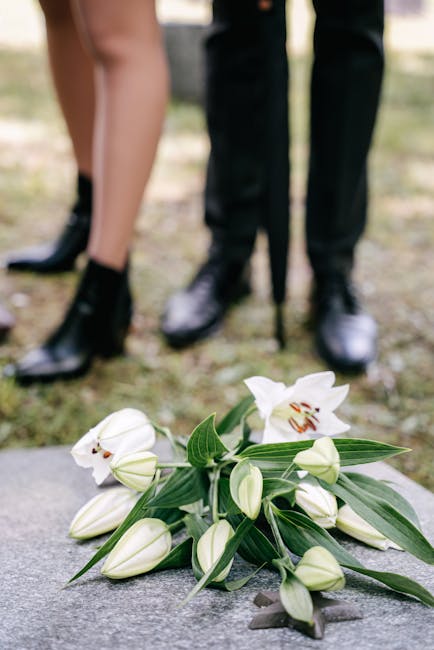
Etiquette matters because flowers can be deeply personal. A white wreath might feel traditional and calm. A spray with red roses may express love and devotion. A tribute in the shape of a name, cross, heart, or symbol may be meaningful to the family but may also require checking whether there are restrictions on size, placement, or removal afterward. Not every site treats every arrangement the same way. Truth be told, that catches people out more often than you'd think.
Council permits or permissions matter because public spaces and burial grounds often have rules about what can be displayed, where items can be left, and how long they remain in place. If a tribute is going to a cemetery, memorial lawn, public area, or a site managed by a council, there may be guidance on containers, staking, floral foam, memorial items, or access times. You do not want to arrive on the day and discover something cannot be placed where you expected. That is the kind of stress nobody needs at a funeral.
There is also the simple matter of respect. The right flower choice, the right card wording, and the right delivery timing show care. Small things, but they stay with people.
Expert summary: In Creekmouth, the safest approach is to choose the tribute first, confirm the venue or burial-ground rules second, and only then finalise delivery details. That keeps the flowers appropriate, the timing clean, and the family experience calmer.
How Creekmouth funeral flowers etiquette and council permits Works
At a practical level, the process is fairly straightforward once you break it down. You choose the tribute, check the service location, confirm any restrictions, and arrange delivery so the flowers arrive before the service starts. The detail is in the middle of that process, and that's where etiquette and permission issues live.
For example, a florist may prepare a funeral spray, wreath, sheaf, basket, cushion, posy, or letter tribute. Some are designed for the funeral service itself. Others are intended for a graveside placement or for families to take home afterward. If the tribute is going to a crematorium or church, the venue may have rules about size, materials, and whether items can be placed on the coffin or near the lectern. If the flowers are going to a cemetery after the service, the council or cemetery office may have separate expectations.
It also helps to think in terms of who is receiving the flowers. There is a difference between sending flowers directly to the service and sending sympathy flowers to the family home. One is part of the ceremony. The other is a gesture of support. Both are thoughtful, but they work differently. If you mix them up, the flowers may arrive at the wrong place or the wrong time, and that's awkward when emotions are already high.
In the UK, funeral flower etiquette is generally guided by respect, simplicity, and awareness of the family's wishes. Some families prefer very traditional arrangements. Others welcome brighter colours, seasonal stems, or a more personal tribute. The "right" option is the one that suits the person being remembered and fits the service setting. Sounds obvious, but people often overthink it and then under-check the venue rules. A classic combination, really.
If council involvement is likely, think about permissions early. Common situations include:
- placing flowers in a cemetery or burial ground managed by a local authority
- using larger tributes that may affect shared spaces or pathways
- leaving memorial flowers after the service
- using stands, bases, stakes, or other supports
- bringing floral items into a public memorial area
Not every arrangement needs formal approval, but enough do that it's worth checking rather than guessing.
Key Benefits and Practical Advantages
Getting the etiquette and permit side right gives you more than peace of mind. It makes the whole process smoother for everyone involved.
1. The tribute feels appropriate. A well-chosen arrangement shows thought. A white sympathy wreath, for example, can communicate quiet respect, while a bespoke tribute can reflect the personality, faith, or hobbies of the person who has died.
2. Delivery goes where it should. Funeral flowers are time-sensitive. If a florist knows the venue, burial-ground rules, and the service schedule, the flowers are less likely to be delayed, rejected, or placed in the wrong area.
3. The family avoids last-minute stress. There is enough to juggle already. Nobody wants to phone around on the morning of a service because a large tribute needs checking.
4. You avoid avoidable friction with venue staff. Funeral directors, cemetery teams, and council staff are usually helpful, but they work within rules. Respecting those rules makes life easier for everyone.
5. The flowers can be enjoyed as intended. That may sound simple, but it matters. The right stems, card message, and scale of arrangement allow the flowers to support the service rather than distract from it.
There is a quieter benefit too: doing this properly helps you feel that you have honoured the person well. In grief, that sense of having got something right can mean more than people admit out loud.
Who This Is For and When It Makes Sense
This topic is relevant if you are arranging flowers for:
- a funeral or memorial service in Creekmouth or nearby
- a burial or graveside tribute
- a crematorium service where flowers have to meet venue guidance
- a family who has asked for a particular style or colour scheme
- a public memorial area or council-managed site
- a sympathy delivery to a home, not the service itself
It also makes sense if you are the person who has been "asked to sort the flowers" and suddenly finds yourself in charge of a job that sounds small but carries a lot of emotional weight. That happens more than people expect. One minute you're choosing wording for the card, the next you're trying to remember whether lilies are appropriate and whether the cemetery allows floral foam. A bit much, honestly.
For families planning in advance, it is especially useful to understand what is customary and what needs permission. For funeral directors and organisers, it helps to keep the process tidy and compassionate. For local residents, it is a practical way to avoid delays and wasted money.
Step-by-Step Guidance
1. Start with the person, not the flowers
Ask what would feel right for the person being remembered. Did they love white roses, bright mixed flowers, or something understated and classic? Were they religious, non-religious, formal, cheerful, or deeply private? The tribute should feel like them, not like a generic catalogue choice.
2. Confirm where the flowers are going
There is a difference between a church service, crematorium service, cemetery burial, home delivery, and memorial venue. The destination affects the size, type, and timing of the arrangement. If the flowers are going to a council-run cemetery, check whether there are local rules about placement or later removal.
3. Ask about any restrictions before ordering
For larger tributes, custom lettering, or unusual shapes, it is wise to ask the venue or funeral director whether there are restrictions. Some places can accommodate bigger pieces; others prefer more compact designs. Better to know before the flowers are made.
4. Choose the right style of tribute
Common funeral flower types include wreaths, sprays, posies, cushions, baskets, sheaves, hearts, crosses, and letter tributes. Each has a slightly different feel. Wreaths are traditional. Sprays are often used on or around the coffin. Hearts and letters feel more personal. Baskets and posies are a little easier if you want something softer and less formal.
5. Write the card message clearly
Keep the message short, sincere, and readable. The florist or funeral home may need to place the card quickly, so avoid writing a whole speech. A simple line like "With deepest sympathy" or "Forever in our hearts" is often enough. If you're close to the family, a warm personal message is fine too.
6. Confirm delivery timing
Funeral flowers usually need to arrive before the service begins, often with a little margin for sorting and placement. Ask for delivery instructions that match the venue. If the service is early in the morning, don't leave it to the last minute. That's the sort of thing that can unravel fast.
7. Follow up if the flowers are for a graveside or memorial area
If the tribute will be moved after the service, or left in a cemetery, check whether anyone needs to collect it later or whether it can remain. This is where council guidance may matter. Some sites are more flexible than others, and families should not assume.
8. Keep receipts and order details
Not glamorous, but useful. If a change needs to be made, or if there is a delivery question, having the details to hand can save time and emotion.
Expert Tips for Better Results
Use seasonal flowers where possible. They usually look fresher, travel better, and feel more natural. In autumn, softer muted tones can look especially fitting; in spring, lighter whites and pastels often work beautifully. You do not need to force symbolism into everything. Sometimes a well-balanced, elegant arrangement is enough.
Think about the venue lighting. A tribute that looks lush in a shop can appear very different under strong indoor lighting or in a dim chapel. White and green designs are often reliable because they read clearly from a distance.
Ask whether the family has specified colours or exclusions. Some families ask for white only. Others welcome all colours. Some may request no lilies due to scent or sensitivity. If there is guidance, follow it. No debate, no fuss.
Keep larger tributes structurally simple. The more complex the design, the more chance of movement in transit. A neat, stable arrangement is often a safer choice for service delivery.
Match the tribute to the relationship. A close family member may choose a heart, casket spray, or letter tribute. A colleague might send a posy or sympathy basket. Friends of the family may prefer a wreath or spray that is respectful without feeling too intimate.
Be careful with wording on bespoke pieces. Names, nicknames, and faith references should be checked for accuracy. One wrong letter can be heartbreakingly obvious. And yes, it happens.
Allow time for permissions. If a council check is needed, leave room for that conversation. Same-day panic and formal approvals do not make good friends.
Common Mistakes to Avoid
Even thoughtful people make avoidable slips when arranging funeral flowers. The good news is that most of them are easy to prevent.
- Ordering without checking the venue rules. A tribute may be beautiful and still not be suitable for the space.
- Choosing a size that is too large for the location. Bigger is not always better at a funeral.
- Sending the flowers to the wrong address. Home, church, crematorium, cemetery - they are not interchangeable.
- Writing a message that is too long or too casual. Funeral cards usually work best when they are brief and sincere.
- Leaving delivery too late. This is a classic stress-maker.
- Assuming council permission is automatic. Sometimes it is. Sometimes it isn't. Check.
- Ignoring scent or allergen concerns. Strongly scented lilies or large pollen-heavy flowers may not suit every family.
- Forgetting what happens after the service. If a tribute needs collecting, moving, or removing, say so in advance.
To be fair, most mistakes happen because people are trying to be kind in a hurry. That's understandable. But a five-minute check often saves a very unpleasant phone call later.
Tools, Resources and Recommendations
You do not need complicated tools to get this right. You need the right information, a decent florist, and a few practical checks.
Useful things to have to hand:
- the full service address and postcode
- the funeral director's name and contact details
- the venue name, if different from the address
- any family instructions about colour or flower type
- the delivery date and arrival window
- the name to appear on the card
Useful product categories to browse: a dedicated funeral flowers Creekmouth IG11 collection can help if you want appropriate tribute styles ready-made. For softer condolence gifts, a sympathy range is often easier when the flowers are being sent to the family home instead of the service.
If you are comparing styles, it can help to look at the dedicated tribute options first. A wreath, spray, cushion, posy, or letter tribute each sends a slightly different message. You may also find it useful to review the florist's delivery guidance so you know how timing, handover, and location details are handled.
And if you want reassurance about service standards, the florist's guarantees page is worth a look. That sort of detail is boring until it is suddenly very relevant.
A simple recommendation: when in doubt, choose a restrained, respectful design, add a short sincere card message, and confirm the venue rules before the order is finalised. That combination solves most problems.
Law, Compliance, Standards, or Best Practice
There is no one-size-fits-all legal rule for funeral flowers in Creekmouth, because permissions depend on the place and the managing body. That is why it is better to think in terms of best practice, local guidance, and venue-specific requirements.
For council-managed cemeteries, memorial grounds, or public spaces, the key point is that the authority may have rules about:
- where flowers can be placed
- how long they can remain
- what materials are acceptable
- whether larger tributes need approval
- how items are removed or maintained
For funeral services, the venue or funeral director may have its own guidance about size, timing, and placement. Churches and crematoriums often work closely with families to make sure flowers are positioned appropriately, but they still need practical information in advance.
From a standards point of view, the safest practice is to treat every funeral as specific to the person and the venue. That means checking details rather than assuming. It also means being careful with tributes that include frames, wire, pegs, or memory items. Even when these are allowed, they may need to be positioned in a particular way.
Privacy and contact details matter too. If you are ordering on behalf of someone else, only share the information needed for the order and delivery. A florist handling a condolence order should keep the communication straightforward and discreet.
One more practical point: if flowers are being delivered to a place where access is limited, such as an inner service room or restricted cemetery office, make sure the florist has all the delivery instructions up front. A sensible process is part courtesy, part compliance, and part plain old common sense.
Options, Methods, or Comparison Table
Not every funeral tribute serves the same purpose. If you are deciding what to order, this comparison may help.
| Flower option | Best for | Style | Practical note |
|---|---|---|---|
| Wreath | Formal services and traditional tributes | Round, symbolic, respectful | Often suitable for church, crematorium, or cemetery use |
| Spray | Coffin-top or service display | Longer, elegant, linear | Useful when flowers need to sit neatly across a coffin |
| Posy | Smaller tribute or family home delivery | Compact and soft | Easy to transport and usually less likely to conflict with venue rules |
| Basket | Sympathy or service tribute | Natural and contained | A practical choice if you want something stable and easy to move |
| Heart | Close family tribute | Personal and affectionate | Can be meaningful but may need size checking at some venues |
| Letter tribute | Name or relationship tribute | Highly personal | May require extra planning, especially if the letters are large |
| Sheaf | Simple, understated tribute | Natural and hand-tied | Often chosen when families want something quieter |
If you are not sure what to choose, a wreath or posy is usually a safe starting point. A family member closer to the deceased may prefer something more personalised, like a heart or letter tribute. No rule says you have to go grand. Sometimes the smaller option says the most.
Case Study or Real-World Example
Here's a typical Creekmouth scenario. A family is arranging a service for a grandfather who lived locally and wanted things kept simple. One relative plans to send a large name tribute, while another wants a white wreath and a small card. The service will be followed by a burial in a cemetery managed by the local council.
At first, the family assumes the tribute can simply be brought to the graveside and placed there. But a quick check reveals that the cemetery has guidance about what can be left on the plot, and the larger item would be better presented during the service rather than positioned afterwards. The florist adjusts the order, the funeral director confirms the timing, and the tribute arrives with the rest of the flowers before the service begins.
The result is simple: fewer questions on the day, no awkward repositioning, and a tribute that feels respectful without causing a site-management headache. That's the outcome you want, really. Calm, steady, no drama.
In another very common example, a neighbour wants to send flowers but is unsure whether they should go to the funeral home or the family's address. They choose a sympathy basket for the home, rather than a service piece, and add a short handwritten message. The family receives it quietly, away from the pressure of the funeral itself. Small decision, big kindness.
Practical Checklist
Use this checklist before you place your order.
- Have I confirmed the exact service or delivery address?
- Do I know whether the flowers are for the service, the graveside, or the family home?
- Has the venue or council given any guidance on tribute size or placement?
- Have I chosen a style that fits the relationship and the setting?
- Is the colour palette appropriate to the family's wishes?
- Have I checked for any fragrance or allergy concerns?
- Is the card message short, clear, and sincere?
- Have I allowed enough time for delivery before the service?
- Do I know whether the flowers will be collected, left, or removed later?
- Have I confirmed the florist has the right contact details?
If you can tick most of those off, you are in good shape. If not, pause and ask questions before ordering. It's far better than trying to fix a problem on the morning of the funeral.
Get a free quote today and see how much you can save.
Conclusion
Creekmouth funeral flowers etiquette and council permits may sound like a niche topic, but in practice it sits right at the point where care, timing, and local rules meet. That matters because funeral flowers are never just flowers. They are a message, a gesture, and sometimes the last thing someone sends with a full heart.
The best approach is steady and respectful: choose a tribute that fits the person, confirm where it is going, check whether the site has any permission requirements, and give the florist clear instructions. Do that, and the whole process becomes much simpler. Not painless, obviously. But simpler.
And on a difficult day, simpler is a gift.
Frequently Asked Questions
Do I need a council permit for funeral flowers in Creekmouth?
Not always. It depends on where the flowers are going. A funeral service at a church or crematorium may only need venue approval, while a cemetery or public memorial area may have council-managed rules about placement or duration. It is safest to check before ordering.
What funeral flowers are most appropriate in the UK?
Wreaths, sprays, posies, baskets, cushions, and heart tributes are all common and respectful. The best choice depends on your relationship to the deceased, the type of service, and any family preferences.
Can I send funeral flowers to a crematorium in Creekmouth?
Yes, in many cases you can, but you should always confirm the service time and delivery instructions first. Some venues have specific drop-off windows or guidance on where arrangements should be left.
What is the difference between sympathy flowers and funeral flowers?
Funeral flowers are usually sent to the service or graveside. Sympathy flowers are often delivered to the family home as a private gesture of support. Both are thoughtful, but they serve different purposes.
Are there restrictions on flower types for funerals?
There can be. Some families prefer certain flowers, colours, or styles, and some venues may discourage very large or awkwardly shaped arrangements. Scent-sensitive families may also prefer less fragrant blooms.
How far in advance should I order funeral flowers?
As early as you can, especially if the service date is fixed or if you need a personalised tribute. Leaving it until the last minute can limit options and make delivery harder to coordinate.
What should I write on a funeral flower card?
Keep it short and sincere. Common examples include "With deepest sympathy," "Forever in our hearts," or a brief personal message. If you knew the person well, a simple warm line is often best.
Can I order a bespoke tribute with letters or a shape?
Yes, many florists offer personalised tributes such as letters, hearts, and faith-based designs. Just allow extra time and check venue rules if the tribute will be displayed at a service or cemetery.
What happens to funeral flowers after the service?
That depends on the family and the venue. Some flowers are taken home, some stay at the graveside, and some are removed by staff later. It is worth asking in advance so nobody has to guess on the day.
Is there a best colour for funeral flowers?
White is often chosen for its calm, classic feel, but there is no single right answer. Soft pastels, mixed seasonal flowers, and even brighter colours can be appropriate if they reflect the person's character or the family's wishes.
Can I send flowers if I cannot attend the funeral?
Absolutely. Sending flowers is a respectful way to show support when you cannot be there in person. A sympathy bouquet or a smaller tribute with a short card message is often ideal.
How do I know whether a tribute is too large?
If you are unsure, ask the florist and the venue or funeral director. They can usually tell you what size works comfortably in the available space. When in doubt, a more compact arrangement is often easier to manage.
Where can I find suitable funeral flowers for Creekmouth?
Look for a florist with a clear funeral collection, practical delivery guidance, and experience handling sympathy orders. A dedicated funeral range is usually the easiest place to start because the designs are already suited to the setting.
What is the most respectful way to avoid mistakes?
Check the venue, confirm the address, keep the message simple, and allow time for delivery. Those four basics prevent most problems and show real care. It's not glamorous, but it works.
Grief can make ordinary decisions feel oddly heavy. A thoughtful flower choice, handled with care, can bring a little steadiness when it is needed most.